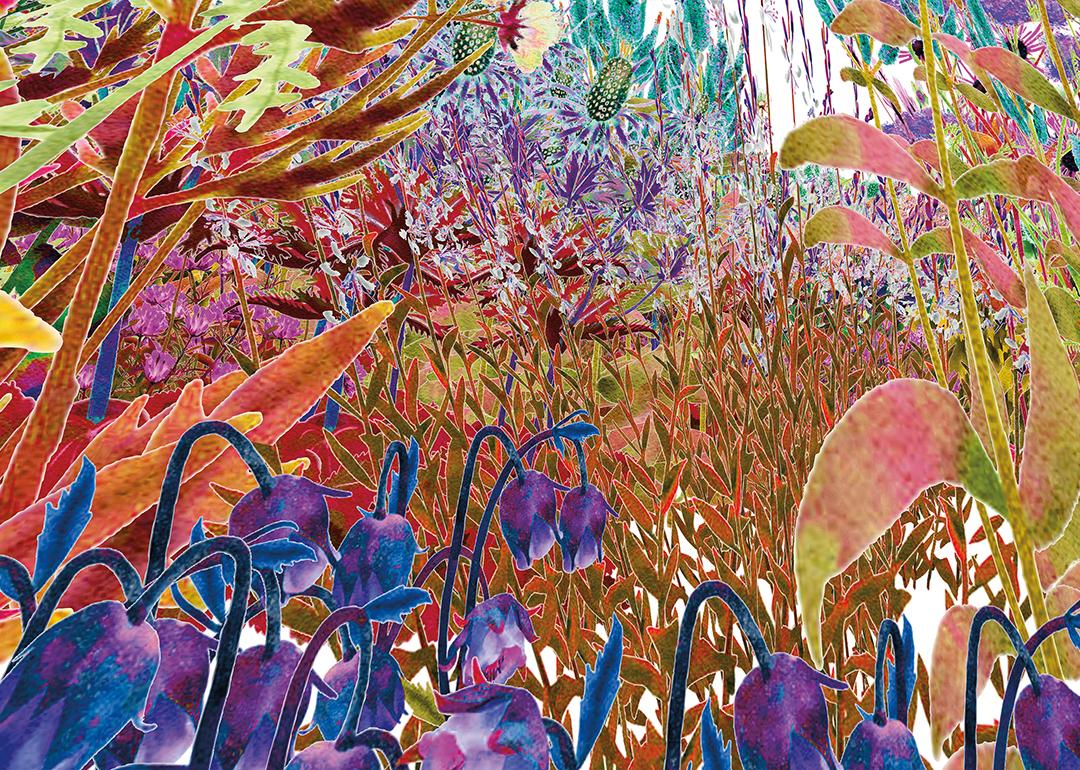
How a 'pollinator pathmaker' can help us see like a bee
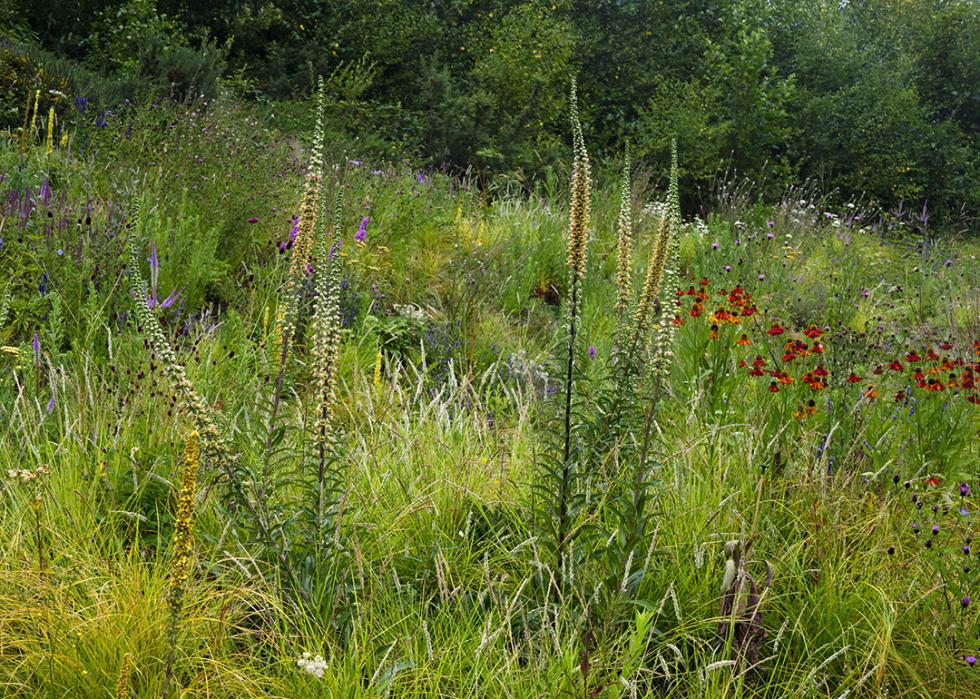
The gardens are not designed to please humans but rather pollinators, including birds, bats, moths, wasps, and beetles. Working with scientists, horticulturalists, and Google, Ginsberg learned that each pollinator has specific needs, comes out at specific times and often needs a very specific plant to feed or lay eggs. Monarch butterflies need native milkweed, for instance, and bumblebees love Cynara cardunculus, a type of artichoke. Ginsberg developed the "altruistic algorithm" with string theory physicist Przemek Witaszcyk to support the maximum pollinator species possible, including endangered plants from a curated selection chosen solely for their benefits to pollinators.
As humans, we rarely question our perception of the world. But seeing the world from a bee's perspective might open our eyes to their significance. Without bees, we'd lose 87% of our crops, most flowers, and fruit. Bees are crucial for our survival. And yet, most of us never stop to consider how they navigate the world.
"It's crucial to highlight this very important concept that the world is not the same for everyone and the world that we see as humans is just one version," Ginsberg says. During the pandemic isolation, she took a deep dive into the science, finding out bees are even smart enough to master mathematical calculations and that bumblebees enjoy playing ball. Ginsberg was "amazed to discover some insects are equipped with 15-dimensional color perception," she says. "We cannot even imagine how the world looks to them. This opened up all these questions about consciousness, sentience, and species."
In addition to the big public gardens, Ginsberg's free DIY algorithm toolbox allows amateur gardeners to plug in their own yard conditions and turn their patch into living artwork as well. They can see 3D visualizations of their unique garden blooms on their screens. However, "it only becomes art once it is actually planted," Ginsberg says. She is wearing a black blouse with daisies, fitting for her name, and applied the algorithm to her own small garden outside of London as well. She originally studied architecture and then worked for 10 years with synthetic biologists, "essentially researching how humans can exploit nature, the opposite of the Pollinator Pathmaker."
Both the University of Exeter and the Natural History Museum are conducting studies, surveying the sites and comparing them with wildflower meadows and other gardens. The studies are not completed yet, but initial findings point to a significant increase in biodiversity in the Pollinator Pathmaker territory, including some species you wouldn't normally find in the middle of Berlin.
Ginsberg emphasizes that "an artwork is a proposition and a provocation rather than a solution, because it's not a solution to the biodiversity crisis. But it is exploring the idea of agency." She sees Pollinator Pathmaker as "a response to human-made ecological damage. By creating for other species, it uses art to give us empathy and agency to care for them."
So far, the algorithm only has databases for Europe, but Ginsberg is currently designing the first version for the U.S. Her vision is to "create the largest ever climate positive artwork together, by planting living artworks for pollinators around the world." This means adding new plant databases region by region as she gets funding. Ginsberg hopes her gardens will spread across the globe, eventually dotting the planet with pollinator playgrounds. A bee-lievable vision.