How artificial intelligence is transforming HR departments
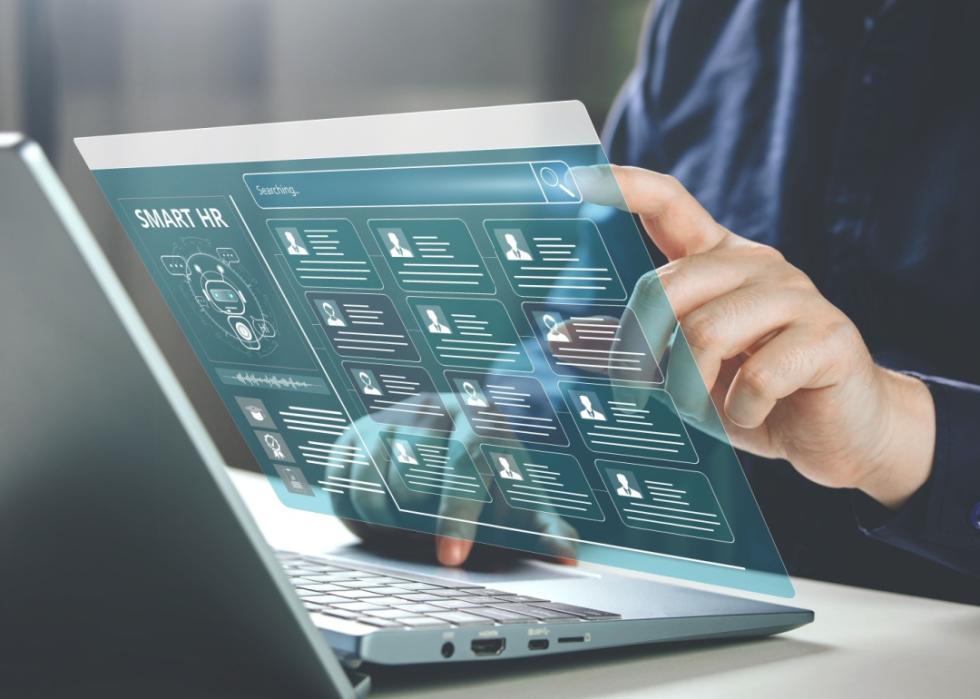
For many companies, AI has dramatically transformed the hiring process. At Genesis10, a New York City-based HR staffing firm, AI-powered chatbots prescreen résumés, filtering out unqualified candidates. "This not only expedites the hiring process but also improves the overall experience," Genesis10 CEO Harley Lippman told SHRM in a 2024 interview.
Similarly, at Integrity Staffing Solutions, AI helps generate job descriptions, leaving the rest of the hiring process to human recruiters. "We view AI as an invaluable tool rather than a substitute for human interaction," said Ellen Kuntzmann, the company's director of talent acquisition in Newark, Delaware.
In a 2024 McKinsey article, thought leaders examined how AI technologies are transforming HR and found that these tools relieved professionals up to 70% of their administrative tasks. From AI-driven chatbots that deliver individualized learning plans to management platforms that collect performance ratings and 360-degree feedback, such automation allows HR representatives to focus on strategic, human-centric work.
Despite its benefits, AI comes with risks that could undermine critical HR functions and values. SHRM's survey revealed that only 7% of companies use AI for tasks like prescreening interviews, which could reflect concerns over bias, data privacy, and a lack of empathy in automated systems. Without human oversight, systems may inadvertently harm both candidates and employees.
Potential employees, too, remain apprehensive about using AI in HR, viewing it as a detached system that may elide the depth of their skills and career histories. Many worry that algorithms reject their résumés before they reach a human decision-maker, missing out on professional qualities or experiences that do not fit rigid metrics.
Computerworld reports that AI tools are increasingly used to rank employee performance, recommend training, and even suggest terminations. However, these tools are criticized for eliminating qualified candidates or unfairly flagging employees for dismissal, particularly in low-wage jobs. To counter these challenges, some companies have started manually reviewing résumés rejected by AI to ensure automation is vetted by human oversight.
Cabral emphasized the risks of unchecked AI. "What is [AI] learning from?" Cabral asked, adding that there are already systems in place that don't work optimally and reinforce inequities. "What's teaching it to be better?"
Conclusions are mixed about AI's ability to reduce or eliminate existing biases, with some studies indicating it further entrenches them. Adding to these concerns, almost all (95%) HR leaders surveyed by Eightfold AI in 2022 said they use AI to support diversity, equity, and inclusion efforts. However, only 26% employ anonymous résumé reviews to reduce bias, indicating a gap between intention and execution. What's more, SHRM's survey found that 2 in 3 organizations that bought AI tools from vendors said they were somewhat transparent or not transparent at all about the steps taken to eliminate bias and discrimination.

Growing reliance on AI to perform tasks informed by experience and emotional intelligence raises critical questions about preserving the humanity in HR while embracing technology. Organizations must imbue their values into AI tools to ensure alignment with their culture, Cabral said.
"It's the responsibility of the organization to tap in with the creator [of the AI platforms] and say, 'Give me a good working understanding of what you taught this thing to do. … How do I report if there are issues with it or things that I wanted to not do in my organization that you already embedded in it?'" Cabral said.
People already struggle with empathy and emotional intelligence, according to Cabral, which will reflect in AI: "It's going to show up in the systems. … It's very difficult to really expect a machine to do those things well when we as people aren't doing a great job at making sure that people do those things well."
Cabral also cautioned against overreliance on AI for tasks requiring empathy and nuanced judgment, such as exit interviews and DEI initiatives. While AI can assist with creating job descriptions or drafting policies, maintaining an engaged and inclusive workforce still requires a human touch. "You're not going to have the same level of probing and clarifying and assessment [from automations] that a person who is experiencing the culture the same way is going to have," Cabral explained.
New technologies, such as emotion-aware AI, are attempting to bridge the gap between machine efficiency and human empathy. Conflict management and responding to crises in real time—along with "soft skills" like emotional intelligence, communication, and creativity—are also part of the HR function. Distinct from traditional AI, emotion-aware AI is evolving in this direction, with systems that interpret body language, facial expressions, and vocal tones to adjust responses in real time—similar to human behavior, according to Massachusetts Institute of Technology Media Lab scientist Javier Hernandez.
Research published in the Journal of Business Research in 2024 showed that empathic AI, such as voice assistants like Amazon Alexa, can increase trust and engagement by combining practical functions with emotional connections. However, how these systems are received across industries has yet to be seen.
As AI adoption transforms HR processes, frameworks to guide its responsible usage should also evolve. Cabral emphasized the importance of teaching critical thinking alongside technology adoption.
As Cabral noted, success depends on how well organizations balance efficiency with empathy. "It has to be taught, and you have to work with it, and you have to build a relationship with it so that it can support you," she said. "We need to be a bit more intentional, careful, and make sure that we're honing our own skills to be able to be critical thinkers about [AI]."
Story editing by Alizah Salario. Copy editing by Paris Close. Photo selection by Ania Antecka.