Jobs with the highest fatality rates in the US

-19.0 fatalities per 100,000 full-time equivalent workers in 2023
-Total fatal work injuries in 2023: 171
Transportation incidents—particularly overturned tractors which can weigh an average of around 5,000 pounds—are a leading cause of death among agricultural workers. Although it is not noted as a cause of death, workers in this industry also commonly face prolonged exposure to hazardous chemicals in pesticides and fertilizers.
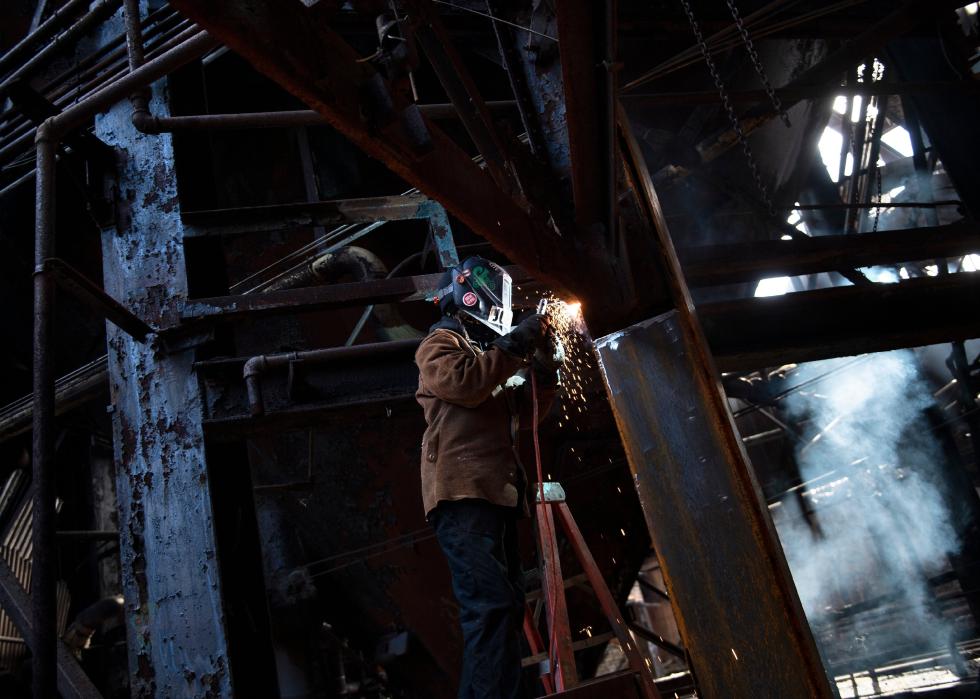
-19.8 fatalities per 100,000 full-time equivalent workers in 2023
-Total fatal work injuries in 2023: 9
Iron and steel workers construct the metal frameworks of buildings or other structures. Their craft requires them to perform strenuous tasks at great heights, while balancing on narrow girders. Falls from significant heights is the most common cause of death among workers. Workers are also at a greater risk for lacerations and burns.

-20.5 fatalities per 100,000 full-time equivalent workers in 2023
-Total fatal work injuries in 2023: 226
On the surface, grounds maintenance work—the installation and upkeep of landscapes—may not sound particularly dangerous, but the data shows otherwise. A 2023 study published in the American Journal of Industrial Medicine found that the rate of fatal work injuries was nearly five times higher for grounds maintenance workers than the rest of the U.S. workforce. During the five-year period from 2016 to 2020, the most common causes of work-related deaths among grounds maintenance workers were transportation accidents (28%) and falls (27%), with equipment incidents and exposure to harmful substances rounding out the top causes, accounting for 23% and 18% of fatalities, respectively.

-26.8 fatalities per 100,000 full-time equivalent workers in 2023
-Total fatal work injuries in 2023: 984
With the majority of their working day spent on the road, delivery drivers are at a greater risk than most of being involved in a vehicular accident. In the summer of 2021, it was reported that some Amazon drivers were being instructed to forgo daily vehicle inspections, potentially ignoring safety issues like worn tire treads, jammed doors, and broken mirrors to avoid the risk of fleet vehicles being taken off the road. Transportation-related incidents are the leading cause of death among delivery drivers, hitting a five-year high in 2019, according to a 2021 BLS report. The second most common cause of death was homicide or suicide.

-27.4 fatalities per 100,000 full-time equivalent workers in 2023
-Total fatal work injuries in 2023: 16
While helpers are not always specialized craft workers like electricians, carpenters, or brick masons, they are responsible for helping keep construction sites safe, clean, and orderly. Falls, slips, and trips are historically the leading cause of death among construction workers. However, transportation incidents, contact with dangerous substances and equipment, and electrocutions are also significant dangers that can lead to death at a construction site.

-31.3 fatalities per 100,000 full-time equivalent workers in 2023
-Total fatal work injuries in 2023: 62
Although plane crashes are rare, when they happen, they are usually fatal. Poor weather conditions, malfunctioning navigation systems, mechanical breakdowns, and human error are common issues across many industries, but in aviation, they are deadly. One of the riskiest but sometimes necessary maneuvers a pilot might employ is a controlled flight into terrain—the act of flying an aircraft into any terrain, like mountains or water. A CDC study revealed that most deadly aircraft crashes in Alaska were a result of a CFIT maneuver.

-41.4 fatalities per 100,000 full-time equivalent workers in 2023
-Total fatal work injuries in 2023: 41
Transportation-related incidents are the most common cause of death among waste collectors. This includes being involved in a crash, being struck by the truck while outside of it, or falling off the back.

-51.8 fatalities per 100,000 full-time equivalent workers in 2023
-Total fatal work injuries in 2023: 113
Fatalities among roofers are most often caused by falling from roofs, ladders, or scaffolding. Falls can happen due to inexperience, user error, malfunctioning safety equipment, or neglecting to use any fall arrest system. Because roofers are exposed to direct sunlight and high temperatures in the summer, heat-related illnesses are also a risk.

-86.9 fatalities per 100,000 full-time equivalent workers in 2023
-Total fatal work injuries in 2023: 19
Commercial fishers, hunters, and trappers face some of the most hazardous work conditions of any profession, contending with dangerous weather, wildlife, and machinery. Roughly half of commercial fishing fatalities between 2000 and 2019 were a result of a disaster that damaged the vessel—like flooding, rogue waves, or storms—according to the CDC. About 30% occurred when a fishing worker fell overboard. Working in remote environments—whether out at sea or deep in the wilderness—means that timely access to hospitals is limited in case of life-threatening emergencies.

-98.9 fatalities per 100,000 full-time equivalent workers in 2023
-Total fatal work injuries in 2023: 52
Loggers are responsible for cutting down trees or limbs and transporting the pieces. Their work puts them at risk of falling from significant heights, being injured by equipment designed to cut through wood, and being struck by logs weighing thousands of pounds. Being struck was the most common cause of death, with the head being the most frequent body part involved in fatalities, according to a Penn State University study that looked at logging fatalities between 2010 and 2020. The study also revealed that poor decision-making was a contributing factor in fatal incidents.