How 10 AI-impacted jobs are projected to grow

- Projected new jobs by 2032: 1,600 (+0.1% from 2022)
- Total projected jobs in 2032: 1.2 million
AI can automate maids' and housekeepers' repetitive, predictive tasks without automating the human workers away. Examples of complementary AI functions range from optimizing cleaning schedules or predicting when appliances and furniture need maintenance.
Without actual robotics, customer-facing aspects of the job—such as greeting customers or providing personalized human care—cannot be automated.

- Projected new jobs by 2032: 200 (+0.8% from 2022)
- Total projected jobs in 2032: 26,800
Surgeons can benefit from AI by receiving personalized feedback on surgeries, leveraging realistic simulations to practice skills, and receiving real-time assistance and guidance during surgeries.
AI can also help surgeons obtain accurate, machine-assisted diagnoses of patient problems and receive personalized evaluations of the risks a patient would face if the surgeon proceeds with a chosen procedure. At present, AI is set to augment much of a surgeon's work without replacing them entirely. Accountability and attribution should AI-assisted surgeries go wrong are significant challenges for automation.

- Projected new jobs by 2032: 29,900 (+1.3% from 2022)
- Total projected jobs in 2032: 2.4 million
AI-powered vacuum cleaners can help clean tough spots and inaccessible corners, while AI-powered predictive analysis can give janitors and cleaners customized cleaning schedules based on foot traffic and predict when items need to be restocked or sent to maintenance. But while these tasks can improve the work of janitors and cleaners, AI cannot entirely replace the people doing the actual work.
A significant barrier to AI adoption in this sector is the price of AI-powered cleaning technology, which can be expensive for small businesses. Furthermore, cleaning and janitorial work requires interpersonal interactions AI can't seamlessly replicate.
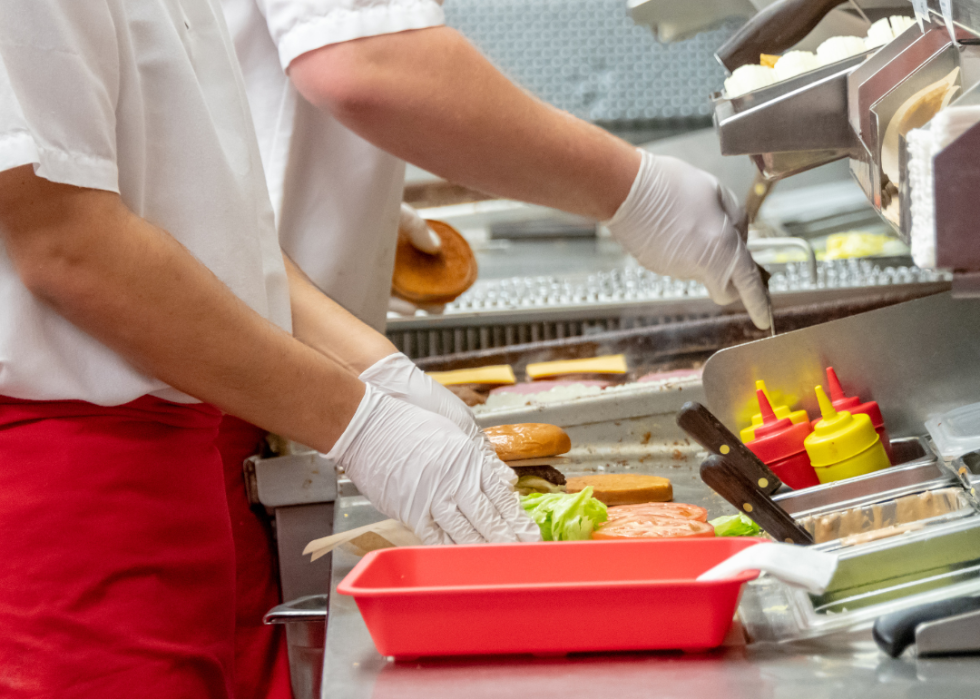
- Projected new jobs by 2032: 50,400 (+1.5% from 2022)
- Total projected jobs in 2032: 3.5 million
Similar to housekeeping and janitorial work, AI's failure at this point to convincingly replicate interpersonal interactions makes complete automation detrimental for industries relying on customer service and human interaction.
AI is therefore likely to play a complementary role in fast-food and counter worker occupations focused on customer service while the technology takes orders and assists with prep.

- Projected new jobs by 2032: 41,700 (+3.5% from 2022)
- Total projected jobs in 2032: 1.2 million
Landscape and groundskeeping workers are more likely to have their work augmented than replaced by AI, largely due to the interpersonal nature of the occupation and the creative decision-making it requires.
AI can assist landscapers and groundskeepers by recommending water schedules based on weather and plant data, identifying pest or disease outbreaks, and finding optimal lawn mowing and hedge-trimming routes.

- Projected new jobs by 2032: 29,900 (+3.7% from 2022)
- Total projected jobs in 2032: 826,500
With strong restrictions on self-driving systems and stringent safety regulations for operating heavy equipment, AI is unlikely to entirely automate industrial truck and tractor operations in the near term.
These workers will, however, reap the benefits of AI offering operators recommendations on the best routes for transporting material, monitoring equipment sensors to predict malfunctions, and offering operators real-time guidance.

- Projected new jobs by 2032: 89,300 (+4.1% from 2022)
- Total projected jobs in 2032: 2.3 million
As with industrial truck and tractor operators, regulations on self-driving vehicles are likely to make AI automation play a complementary role for workers instead of replacing them. AI can augment the work of drivers by providing recommendations on routes based on analysis of weather, safety, and traffic conditions. AI can also offer drivers assistance with maintenance and assess the probability of breakdowns and vehicle malfunction.

- Projected new jobs by 2032: 3,000 (+4.3% from 2022)
- Total projected jobs in 2032: 71,700
Language has several nuances—slang, sarcasm, cultural references, facial expression, intonation—all of which AI struggles to recognize. Thus, it cannot fully automate a translator or interpreter's job at this time.
Nonetheless, AI can augment tasks done by interpreters and translators by translating large volumes of text and conversations, freeing up space for humans to perform more complex interpretation and translation work that requires human judgment.
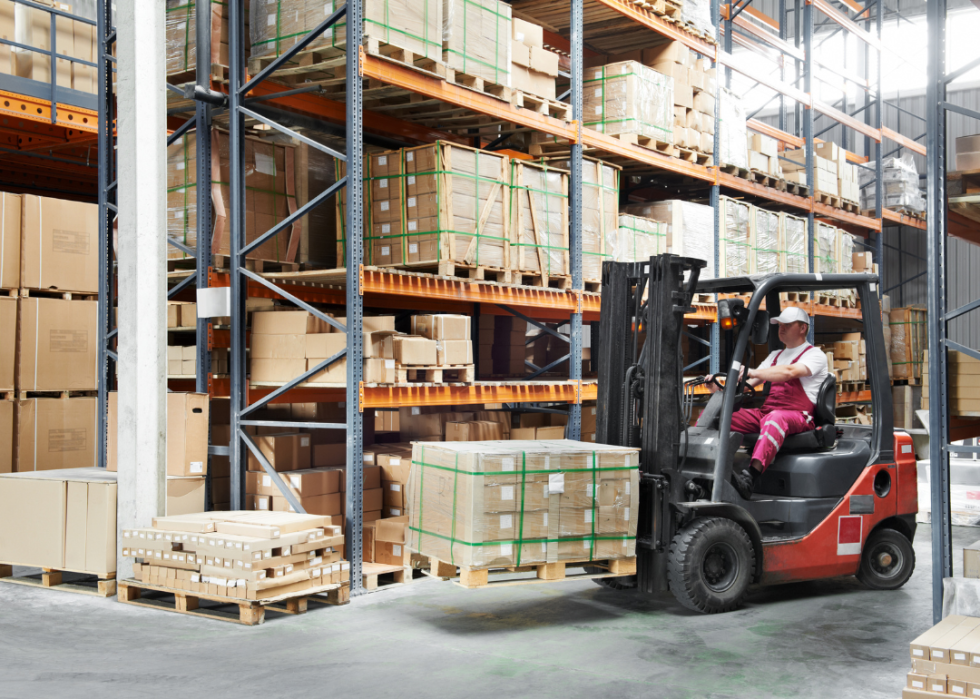
- Projected new jobs by 2032: 158,800 (+5.3% from 2022)
- Total projected jobs in 2032: 3.1 million
Handling heavy objects and moving them often requires physical dexterity and adaptability, which means further development in AI-based, autonomous systems is needed. Furthermore, should the costs of operating such an autonomous system exceed the cost of wages to human workers, it is more likely that employers would choose humans with AI to augment their work.
AI systems can augment the work of laborers and freight movers by offering personalized safety warnings, tips, and advice on the best routes and ways to organize the objects.

- Projected new jobs by 2032: 42,000 (+12.8% from 2022)
- Total projected jobs in 2032: 369,600
While AI can help with the quantitative aspects of financial planning, it cannot entirely replace humans in dealing with the qualitative aspects of financial planning, which requires interpersonal communication, as every client brings their own values, beliefs, and risks.
AI is likely to augment the work of financial advisors instead of replacing them by taking care of simple advisory work, allowing the advisor to focus on more complex problems.
Data reporting by Paxtyn Merten. Story editing by Nicole Caldwell. Copy editing by Paris Close. Photo selection by Ania Antecka.