15% of public school students have disabilities. Resources to support them can vary dramatically
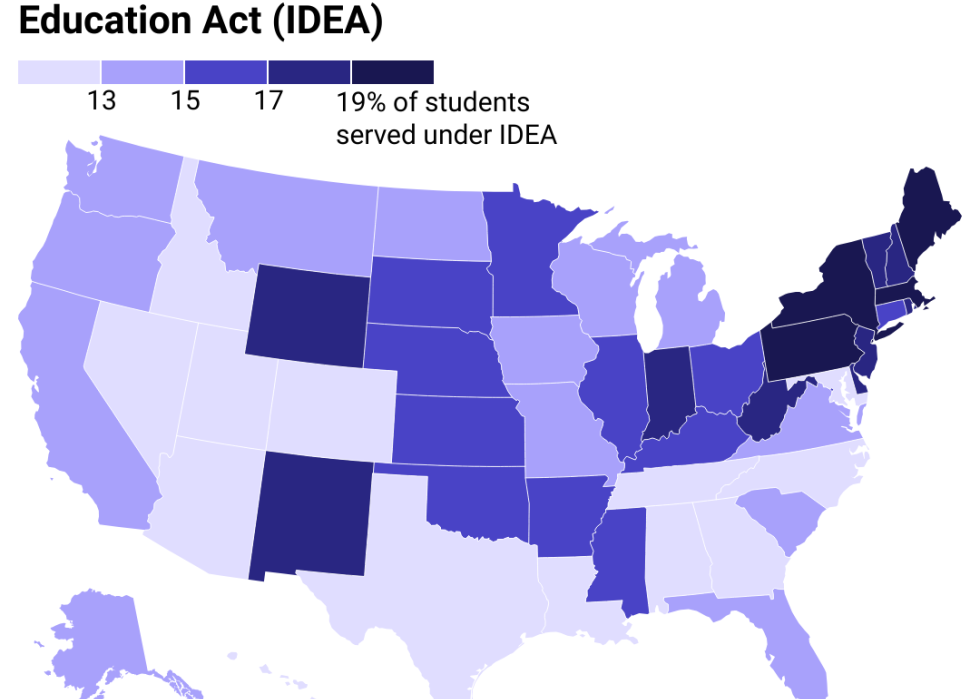
A Government Accountability Office report found differences in state eligibility criteria for receiving special education. Variability by state doesn't necessarily show differences in population, but differences in policies for qualifying students.
Texas, for example, had a policy of capping the number of students with disabilities at 8.5% of the total school population, which limited the amount of services the state provided. The state abandoned this policy in 2018 when the federal government declared it illegal. Funding is still lagging: A 2022 report from the Texas Commission on Special Education Funding concluded the state's school districts still need about $2 billion in special education funding to appropriately evaluate and serve students.
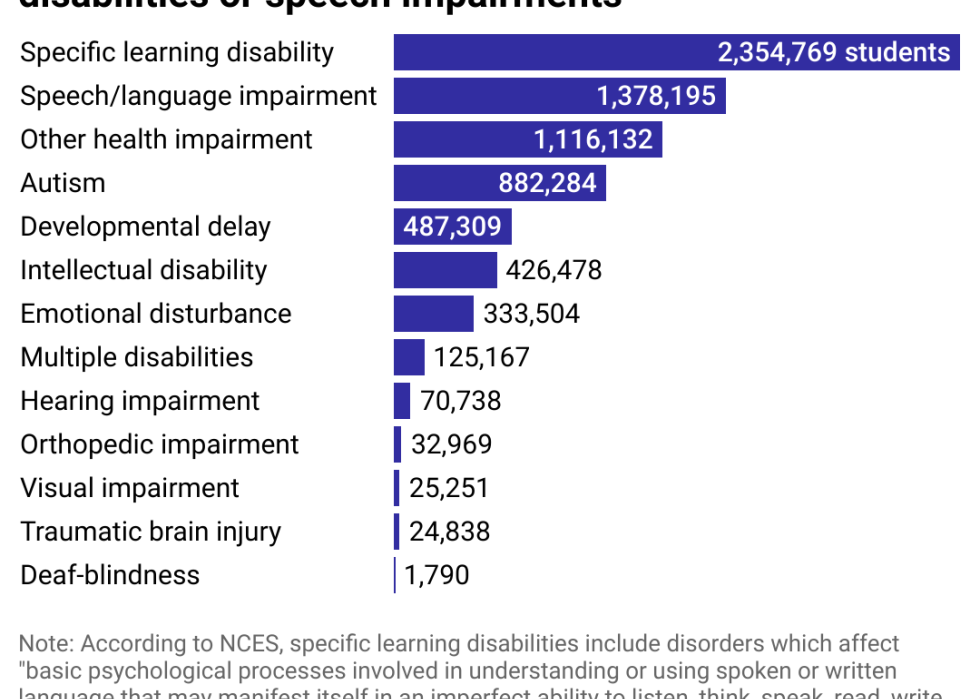
Under IDEA, a student with a disability has an Individualized Education Program that lays out a plan for their education in the least restrictive environment. Some IEPs may include special classes, therapies, resources, and aides to meet the unique needs of each student. Educators might include curriculum adjustments and allowing extra time for tests to adopting assistive technology such as speech-to-text software, lecture recording, and AI-assisted closed captioning and translation programs.
Funding issues can be a challenge for schools. While the federal government is supposed to cover 40% of IDEA-related costs, it rarely pays its share. In the 2020-2021 school year, states and school districts had to cover $23.6 billion in costs the federal government failed to provide, according to the National Education Association. Making up for the shortfall often comes at the expense of a school district's general education funding, which can have a detrimental effect on all students.
Story editing by Jeff Inglis. Copy editing by Tim Bruns.