Teachers vs. inflation: 83% struggling to afford essential back-to-school supplies in 2024
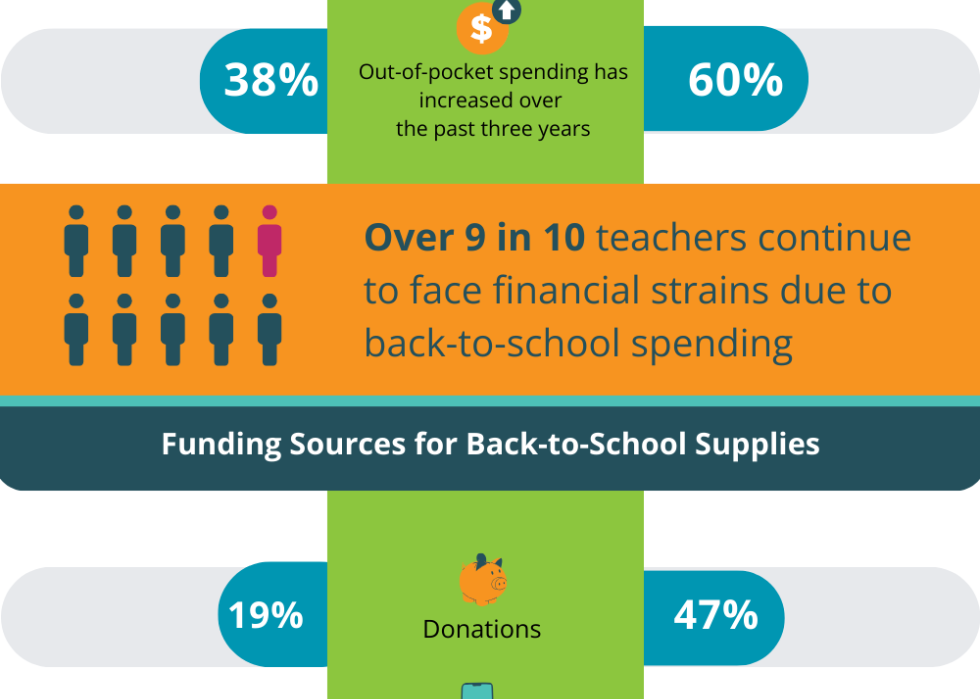
Teaching has always come with hidden costs, but in 2024, these expenses are escalating. According to the National Retail Federation and the National Education Association, 94% of teachers spend their own money on classroom materials, with the average out-of-pocket expense rising by 23.7% over the past two years.
Lauren Erikson, a teacher on special assignment from Monterey County, California, shared her personal experience: "Even now, I still spend money out of pocket for things, for supplies. For instance, in kindergarten classes, the school provides these very long, heavy pencils that are just too cumbersome for little hands learning to write. The supplies provided aren't always what we need, so teachers end up covering the gap themselves."
Inflation's Broader Impact on Back-to-School Spending
While inflation is significantly impacting teachers, it's also having an impact on parents' budgets, where many are expected to spend $586 on back-to-school supplies this year, per student. That's more than $1000 for families with more than one child. These rising costs strain both household budgets and educational resources, creating a domino effect that affects everyone involved in the school community.
Teachers have been hit particularly hard. They're facing rising supply costs while their wages remain stagnant. Adjusted for inflation, teacher salaries have decreased by 5% over the past decade, according to the NEA. This means educators are spending more of their own money while earning less in real terms.
Erikson adds: "The cost of living in California is high, and many teachers have to work extra jobs over the summer or during school breaks just to make ends meet. In our district, teachers can choose to be paid over ten or twelve months, which helps a little, but the financial stress is still very real."
The Psychological Toll on Educators
The financial strain is also taking a psychological toll on educators. Many teachers report feelings of guilt and inadequacy because they can't provide enough resources for their students. In fact, 72% of teachers in 2024 felt guilty about not being able to allocate more funds for classroom resources, a sharp increase from previous years.
This financial and emotional burden contributes to burnout and is a significant factor driving teachers out of the profession. As more educators consider leaving due to these compounding pressures, the need for systemic change becomes increasingly evident.
"Most teachers that I know spend between $200 and $500 a year on school supplies for their kids. When I did summer school, I bought them all notebooks because we didn't have anything. I had a computer, but not all of the students did; I couldn't make copies, so I bought them all notebooks, brought in pens, and bought everything for that summer," Brandie Provenzano, a high school English teacher in Prince William County, Virginia.
Possible Solutions and Calls to Action
Increased school funding, better teacher pay, and robust support systems are some of the systemic solutions that could address these challenges, but that's just a start. Legislative efforts like the Pay Teachers Act aim to address some of these financial burdens.
Teachers are calling for more community involvement, too, urging parents and local organizations to support schools through donations and advocacy for better funding. Understanding the challenges educators face is the first step toward meaningful change.
With data work by Alina Lehtinen-Vela.