Winners and losers in public school funding: How does your state compare?
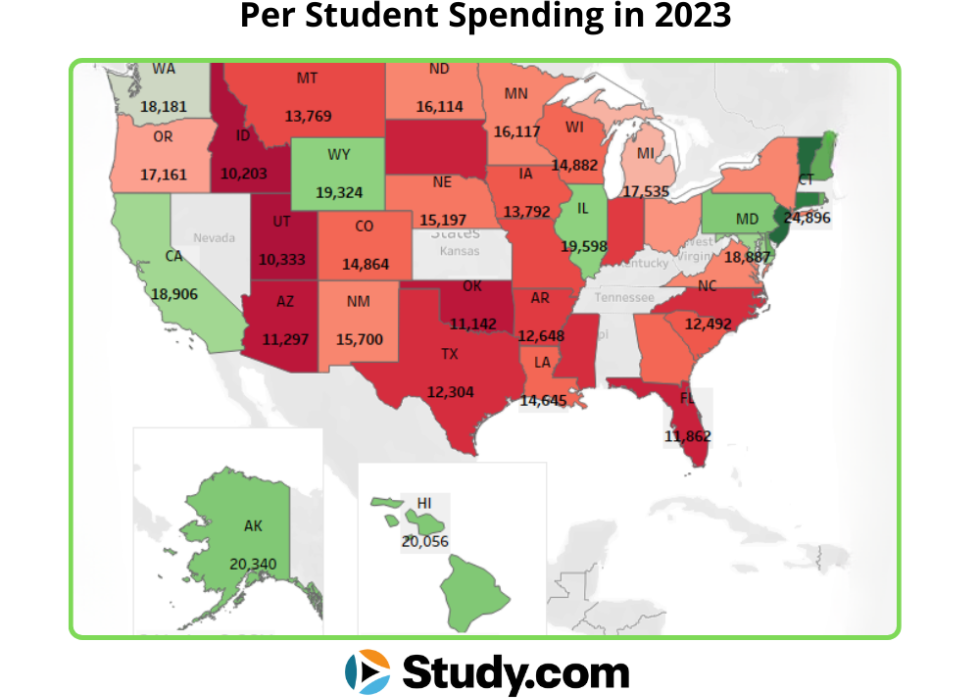
Because of the varied formulas that determine state education budgets, per-pupil spending varies greatly across the country. The states below, however, had the highest per-pupil spending in 2023:
- Vermont: $26,345
- New Jersey: $26,280
- Connecticut: $24,896
- New Hampshire: $21,731
- Delaware: $21,340
- Rhode Island: $21,182
- Alaska: $20,340
- Hawaii: $20,056
- Pennsylvania: $20,056
- Illinois: $19,598
Vermont's education finance system emphasizes local control with school boards setting their budgets and then turning them over to voters to approve—that state also relies on property taxes and other taxes to fund schools. New Jersey's School Funding Reform Act of 2008 was put in place to ensure that lower-income school districts had equitable access to state resources, and like Vermont, local tax revenue is also put toward funding schools.
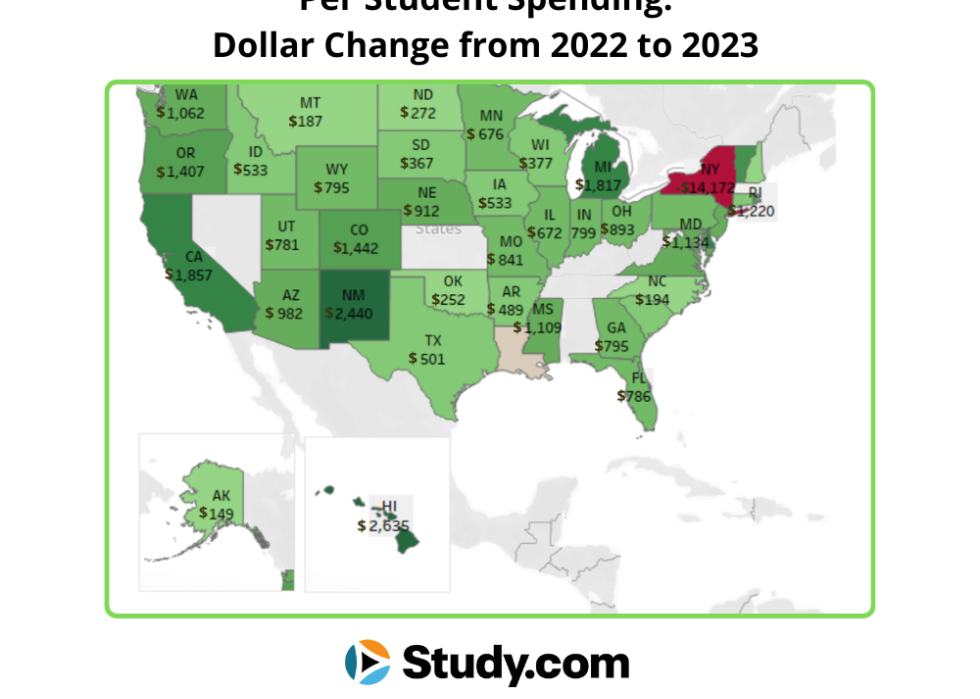
A handful of states had large increases in their per-pupil spending with the largest being:
- Hawaii: +$2,635.22
- New Mexico: +$2,440.45
- Delaware: +$1,983.43
- California: +$1,856.56
- Michigan: +$1,816.55
- Vermont: +$1,736.62
- Colorado: +$1,441.53
- Oregon: +$1,407.32
- Rhode Island: +$1,219.74
- New Jersey: +$1,180.90
Hawaii's per-pupil spending benefited from almost $73 million in new federal funds that were aimed at helping Title I schools, which are schools with a high number of low-income students. With this money, schools could invest in technology, hire teachers, and provide professional development.
In California, the Learning Recovery Emergency Block was part of the 2022-2023 budget but these funds are still being used for pandemic recovery, focusing on learning loss. California's 2023 budget had a big cost-of-living adjustment (COLA) to help with funding and included $20 million to help develop more bilingual teachers.
States with the Lowest Per-Pupil Spending in 2023
Budget limitations and fiscally conservative spending policies are often the hallmarks of states with low per-pupil spending. In 2023, these were the states with the smallest amounts of per-pupil spending:
- Idaho: $10,203
- Utah: $10,333
- Oklahoma: $11,142
- Arizona: $11,297
- Florida: $11,862
- South Dakota: $11,932
- Mississippi: $12,093
- Texas: $12,304
- North Carolina: $12,492
- Arkansas: $12,648
Idaho has routinely ranked lowest in per-pupil spending, partly due to state funding that relies on local levies and local grants. During the pandemic, Idaho altered the way the state education budget was formulated, basing funding on enrollment and not attendance; however, that change has been reversed, which could lead to less money for schools. With pandemic funds also expiring and despite a 16.4% increase in general education fund spending in 2023, schools are bracing for steep cuts.
Although Utah's education budget has grown from $3.8 billion in 2014 to $7.7 billion in 2024, like Idaho, Utah also lags in local and state funding because it depends on state income tax and property tax revenue, and with smaller populations, that means less funding. What's more, funding is adjusted for enrollment and inflation, but Utah is expected to see a decline in public school enrollment, which can lead to even lower per-pupil spending.
States Decreasing Per-Pupil Spending from 2022 to 2023
Two states in particular saw decreases in their per-pupil spending:
- Louisiana: -$283.71
- New York: -$14,172.37
Louisiana determines its education spending based on its Minimum Foundation Program (MFP) formula, and state budget deficits in past years meant little, if any, money was left to put toward increasing the education budget. Although teachers received stipends in the amount of $2,000 in 2023, early childhood education dollars were cut and the state is projected to see almost $250 million cut from the education budget in 2025 due to a state sales tax reduction.
As for New York, last year Mayor Eric Adams announced a sizable $547 million cut in New York City's Education Department's budget. The biggest impact will be felt by the city's free preschool program and other community programs. A teacher hiring freeze and the elimination of vacant non-classroom positions is expected, too. Mayor Adams argued the cuts were necessary due to an influx of asylum seekers creating a financial strain for the city in addition to COVID-19 funds running out.