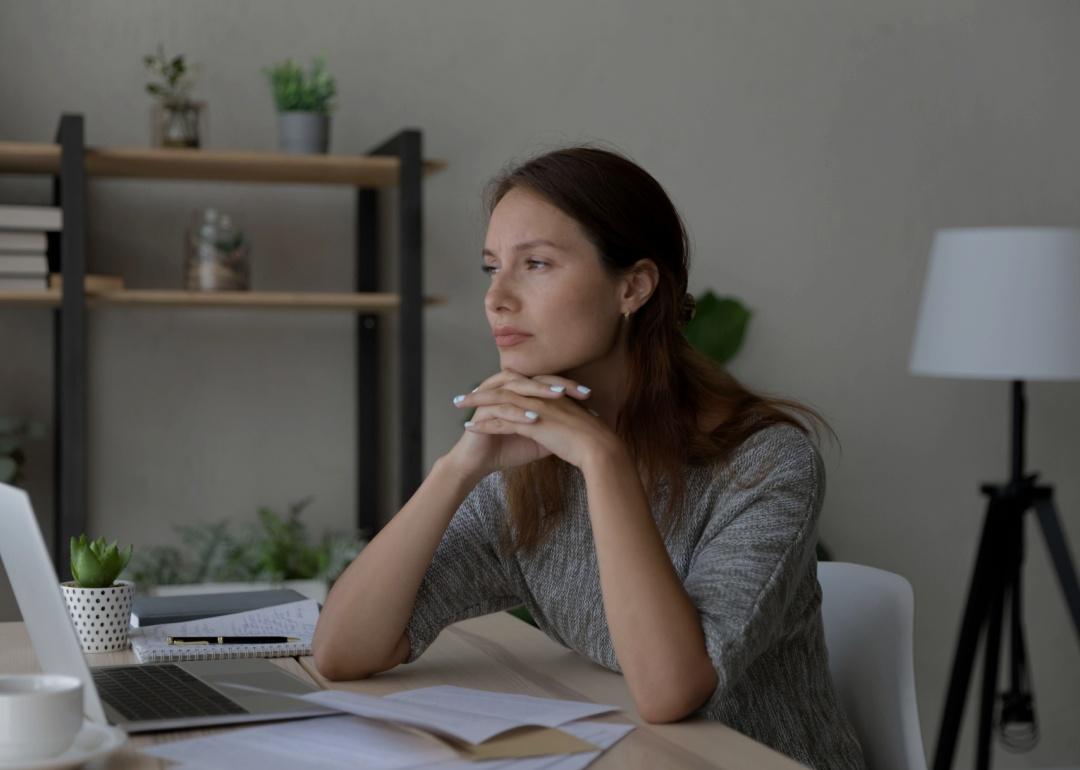
American workers are getting lonelier. Having a 'third place' may help.
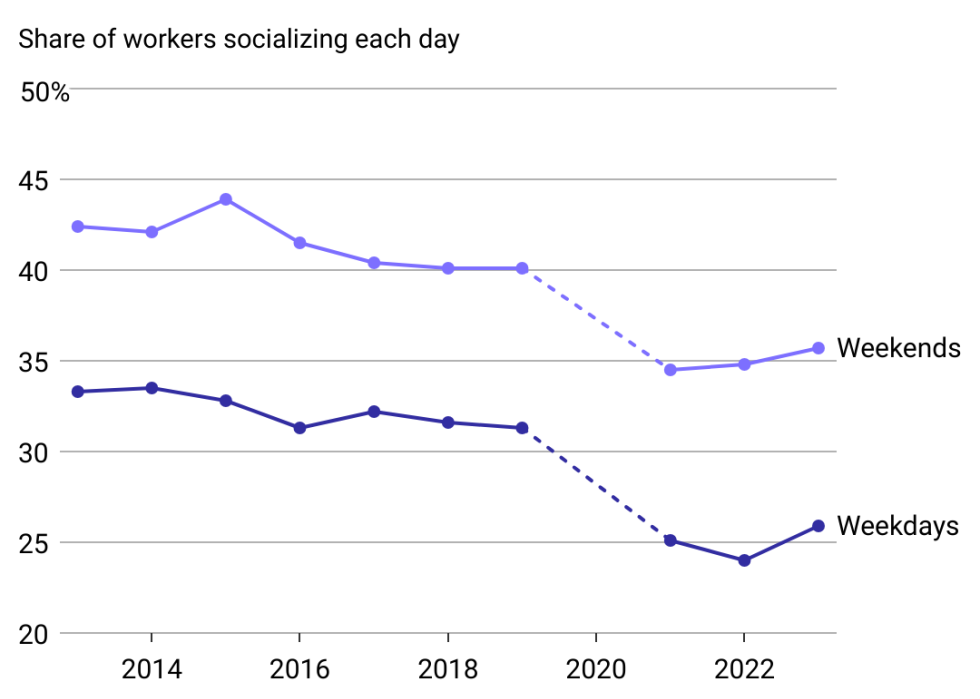
The nature of work is shifting away from the remote workforce of the pandemic to more in-office or hybrid work. This might bode well for increased human interaction, but people report feeling less social and too burdened by the demands of work and family.
Finding a third place might feel daunting when you feel overwhelmed to begin with, but experts say that time in places where no one is forcing you to show up—places that can give you energy rather than take it away—can be restorative.
As Philadelphia psychologist Jaime Zuckerman suggested to SELF magazine, sneaking in some time for your well-being can be as light as walking around the block or stopping by the kitchen. Even if it lasts only 15 minutes, those minutes can open up space in your life.
Or rather than rushing straight from a busy day at work to the constant hustle at home, consider whether you can build in a short pause along the way, even if it's as simple as sitting in your car for a few minutes.
You can also explore activities outside of the demands of home and work, as Maier does. Visit your local library, and scan the event board for something that interests you. Make a date with a friend, maybe to attend a pub trivia night. Volunteer once a month at a food bank or another activity.
Creating space for yourself outside the grind
"In hindsight, it's absurd that I thought the solution to too much work and not enough hours in the day was to add in yet another activity," Maier said of her pottery class. "When I leave that space and go back to my work or family, I feel like it's easier to be patient and keep things in perspective. It feels incredible to grow as a potter while being part of such a supportive community. The social aspect is huge."
Tom Cirillo, a communications specialist in Portland, Oregon, moved to remote work about six years ago. "It was hard for me since I had come from a working environment where I was interacting with a lot of people," Cirillo recalled to Stacker. "And then the pandemic came and made everything much more socially isolated."
When businesses opened again, Cirillo found a supportive outlet with a group of regulars at a gym where "there's a lot of joking and a strong social element." He also began volunteering in mental health peer support through the National Alliance on Mental Illness and knows others who volunteer at food banks, which he said are "great ways to build community and do good."
Technology is a powerful driver of connection and disconnection. A review of literature published in the Association for Psychological Science in 2017 revealed the dual effects of technology on well-being. When used to enhance social relationships, internet use can reduce loneliness; when used as a form of escape, technology can have the opposite effect. A study of about 300 young adults published in the journal Acta Psychologica 2021 found that more time spent on smartphones and social media apps was linked to increased loneliness.
Connection in the age of disconnection
"Today, with everyone doomscrolling and with social media, we are too focused on our phones and screens. We are losing that sense of human connection," Cirillo said. "It's so important to find those real spaces. Online groups can help connect people in some ways, but it helps to make that extra effort to meet people in person."
He suggested finding "a place where you can find a group of regulars, like a karaoke [bar], even if you can't sing well, or pub trivia night, where you can laugh and feel comfortable, and connect with living, breathing people."
Schneider lamented the rise of today's "quick-fix, instant-result" culture, which prioritizes technology and work over personal relationships, mental health, and emotional development. Finding places where "like-minded people gather" is beneficial, but it is not always enough. For those whose loneliness and isolation are severe, he also advised seeing a mental care professional.
For many, though, third places can broaden experience and offer avenues for joy. "I guess for me, the lesson is that having a space that's apart from my other identities as a mom and professor—and that connects me with such a wonderful, creative community—has been therapeutic," Maier said. "So if I have advice, it's to find an activity and do it!"
Story editing by Carren Jao. Copy editing by Janina Lawrence. Photo selection by Ania Antecka.