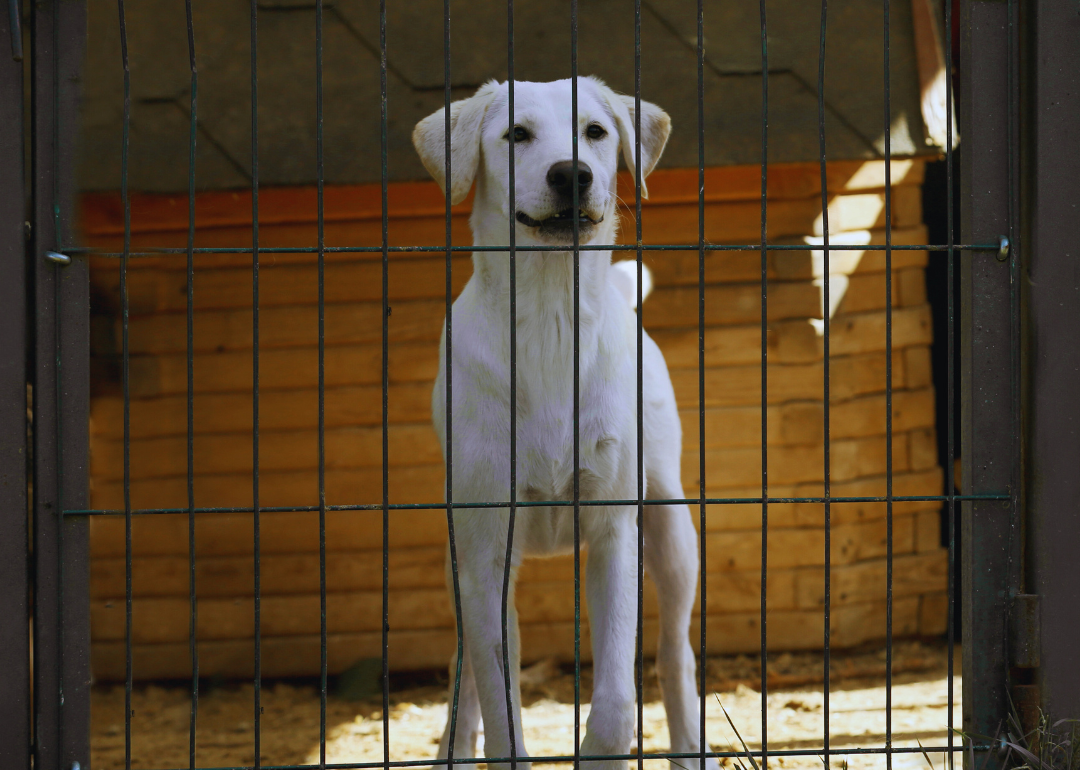
Animal shelter populations are up—here's why and how shelters are responding
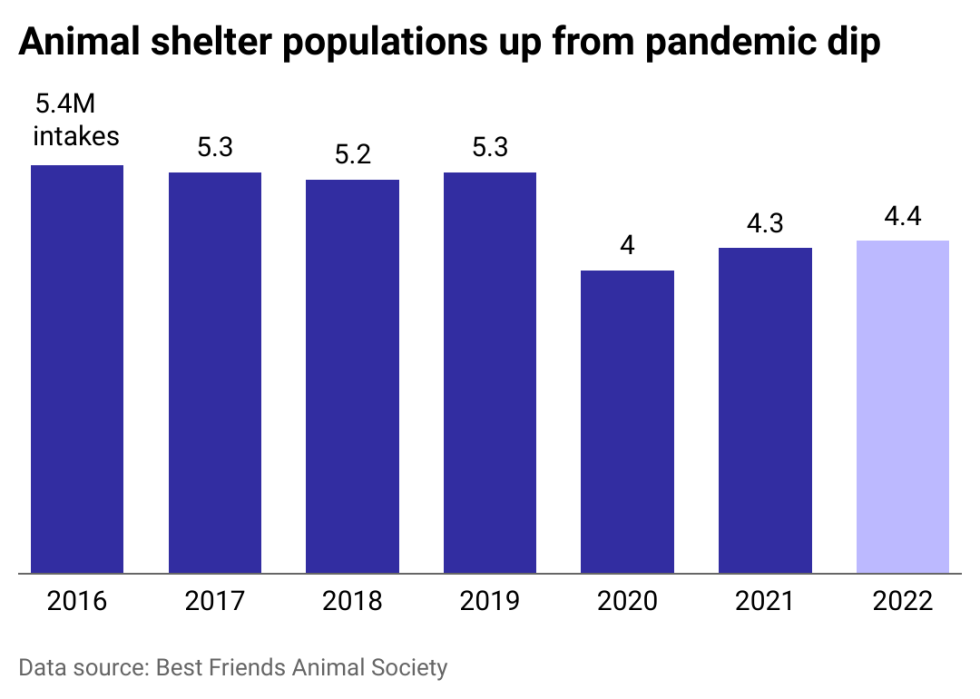
According to Best Friends Animal Society, the number of animals taken in by shelters has actually increased every year since 2020, from 4 million to 4.4 million. Most animal surrenders are linked to their owner's circumstances rather than the behavior or other traits of the animal. For instance, 16.1% of cat and dog shelter surrenders stem from having too many other animals in the household, while 7.2% were compelled to surrender their animal due to financial constraints.
Sadly, dog adoption rates have not rebounded from pandemic lows, thus failing to compensate for the increased amount of intakes. Therefore, shelters with limited capacity must resort to dangerous and ill-advised husbandry practices to limit euthanasia or maintain county and state contracts. In Texas, one shelter in Dallas at 70% over capacity began doubling up large dogs in kennels, and an Austin-based shelter lined its hallways with pop-up crates.
Unfortunately, this strain is not expected to let up any time soon. A Shelter Animals Count report found that animal intakes at shelters will reach a three-year high this year. Best Friends Animal Society further reports that dog adoptions dropped by 26% in 2020, culminating in 170,000 lost canine lives in 2022. The number of lost cat lives declined to 208,000 that same year, saving 10,000 more cats than in 2021. This brings the number of euthanized shelter dogs closer to cats than ever before.
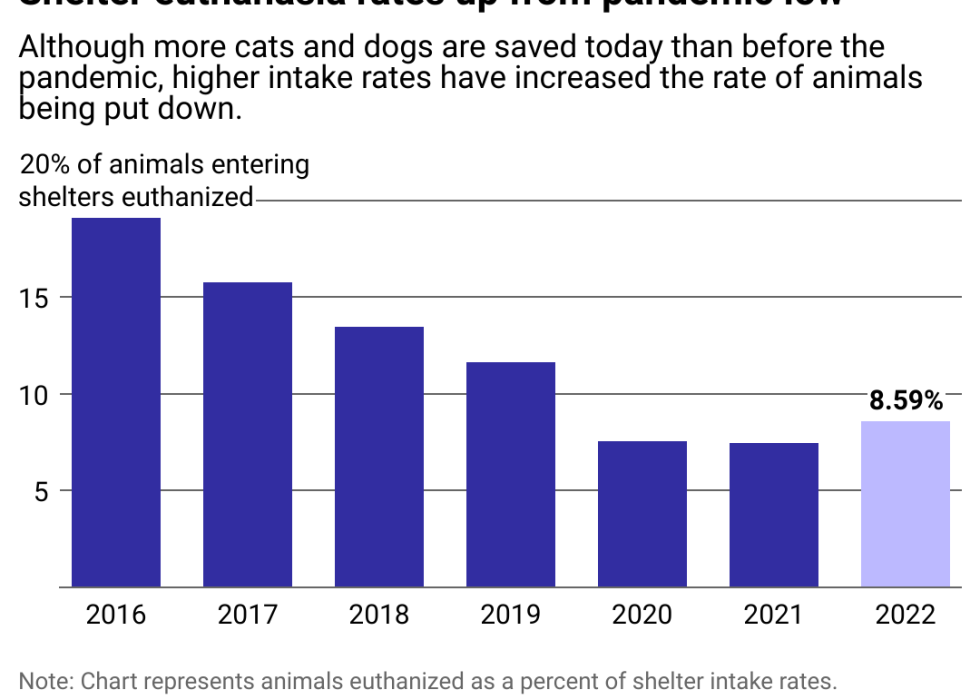
Those 208,000 cats and 170,000 dogs represent the "lifesaving gap," a measure of shelters' euthanasia and saving rates. Per Best Friends Animal Society, "saving" in this context can refer to the animal being adopted, transferred to another shelter, returned to the owner, or, in the case of some cats, returned outside after being spayed or neutered. Such instances where a cat is returned to the field represent 6.1% of cats and only apply to those that lived successfully on their own before intake.
The increase in the lifesaving gap between 2021 and 2022 was driven exclusively by the increase in shelter dog euthanasia. For canines, the gap increased by 66.5% from 2021. On the other hand, cats experienced a 4.9% decrease in the lifesaving gap, reflecting fewer lives lost and more saved than the year before.
In addition to an increase in pet surrenders overall, dog and cat adoptions remained flat, leading to strains in the shelter system. Adoptions drove 58.9% of live outcomes for cats following shelter intake but just 46.3% for dogs. However, cats (25.1%) were slightly more likely than dogs (22.5%) to be surrendered by their owners and accounted for 55% of pets that lost their lives in shelters.
Typically, animals with significant health issues or advanced age are selected for euthanasia first, as they are less likely to be rehomed. In many cases, it may also be the humane option, depending on the nature of the animal's condition; however, such instances are limited.
When faced with the heartbreaking decision to euthanize an otherwise healthy animal due to severely strained resources, animals with behavioral issues are usually among the first to be selected. However, the longer animals are kept in shelters, the more likely they are to develop such behavioral problems. Even while shelters work to reduce euthanasia rates, adoption initiatives and outreach are simply no match for pet overpopulation.
While many shelters are at full capacity or beyond, those with vacant kennels are accepting transports to relieve their strain on resources. Such was the actions of the San Diego Humane Society, which transported more than 300 small pets from San Diego to The Humane Society of Southern Arizona in Tucson in August 2023. At the time, the Tucson society had a low inventory of small pets available for adoption.
Shelters are also looking at ways to encourage adoptions, such as adjusting fees or linking clientele with similar resources, like free pet food pantries and affordable spay and neuter clinics.
At the Williamson County Regional Animal Shelter in Texas, animal services director Misty Valenta touts their Best Match program, which puts shelter staff in contact with people looking to adopt one-on-one.
Like a personalized consultation, staff can help prospective adopters choose the animals that best suit their needs; parents and pets can spend time outside together rather than choosing a pet at the shelter; and the shelter also matches pets to potential adopters outside the Williamson County jurisdiction through virtual meetings.
Some organizations are trying unconventional methods to prevent pet relinquishment, even enlisting social workers. At the Denver Animal Shelter in Colorado, for example, a social worker also goes out with community navigators looking for people who may need help, such as the unhoused, seniors, and people with disabilities.
While the social worker addresses issues faced by the vulnerable, the shelter can also offer services geared toward their pets, such as low-cost medical services, supplies, food, and transportation.
As DAS Director Melanie Sobel told CBS News: "Animals are an integral part of the family and both people and their pets benefit when they can stay together. So we meet community members where they are, rather than waiting for them to come to us."
Story editing by Carren Jao. Copy editing by Paris Close. Photo selection by Ania Antecka.