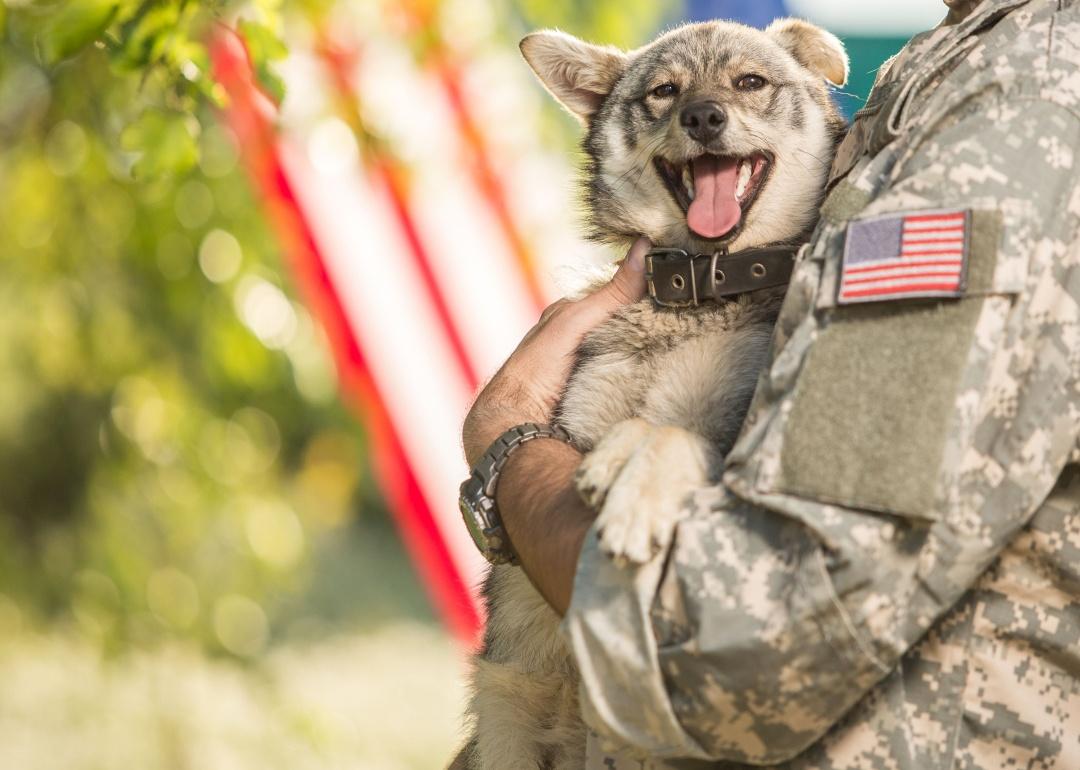
Military service members can now get reimbursed for pet-related moving expenses. Here's the safest way to fly with animals.

Paperwork requirements for moving pets vary depending on whether you are leaving the country, re-entering the country, or traveling between states.
For the first scenario, it's essential to look up specific requirements of the country you're traveling to, which may include certificates proving vaccinations, tests, or health. For the second—which applies to bringing in a pet from a different country, not bringing a domestic pet back into the U.S. after traveling—requirements differ depending on what kind of animal you have and the destination state. For interstate travel, each state will also have unique regulations that include a combination of health certificates, vaccinations, or proof of different medical tests.
Traveling by plane in any of these cases also means registering your pet with the airline ahead of time and keeping a health certificate and physical description of your pet handy.
Many of these forms and certificates may not be readily available, so leave plenty of time to visit the veterinarian and allow for forms to be processed before you travel.
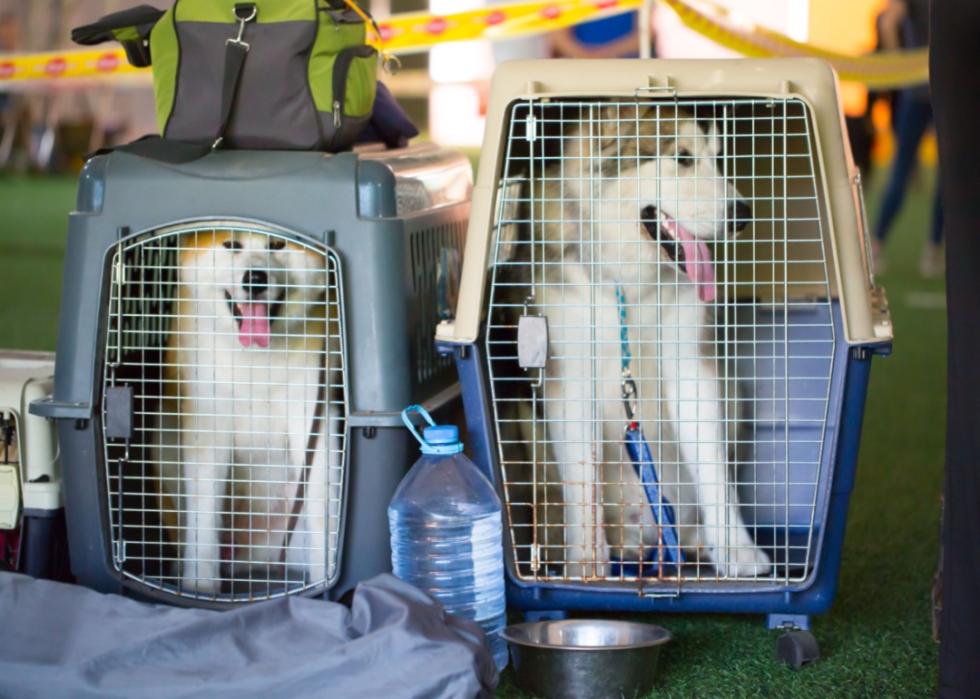
Airlines often charge a nonrefundable fee for bringing a pet aboard a flight, plus costs for checking kennels and other carriers. Fees vary by airline.
For service members flying via the Air Mobility Command, Patriot Express Flights accommodate dogs and cats on a first-come, first-served basis. Fees are calculated using the combined weight of the pet and its carrier: Those under 70 pounds cost $125, from 71 to 140 pounds cost $250, and 141 to 150 pounds cost $375.
No pets and carriers over 150 pounds are allowed. Military personnel will need to weigh the expenses for pet transport against the allowable reimbursement.
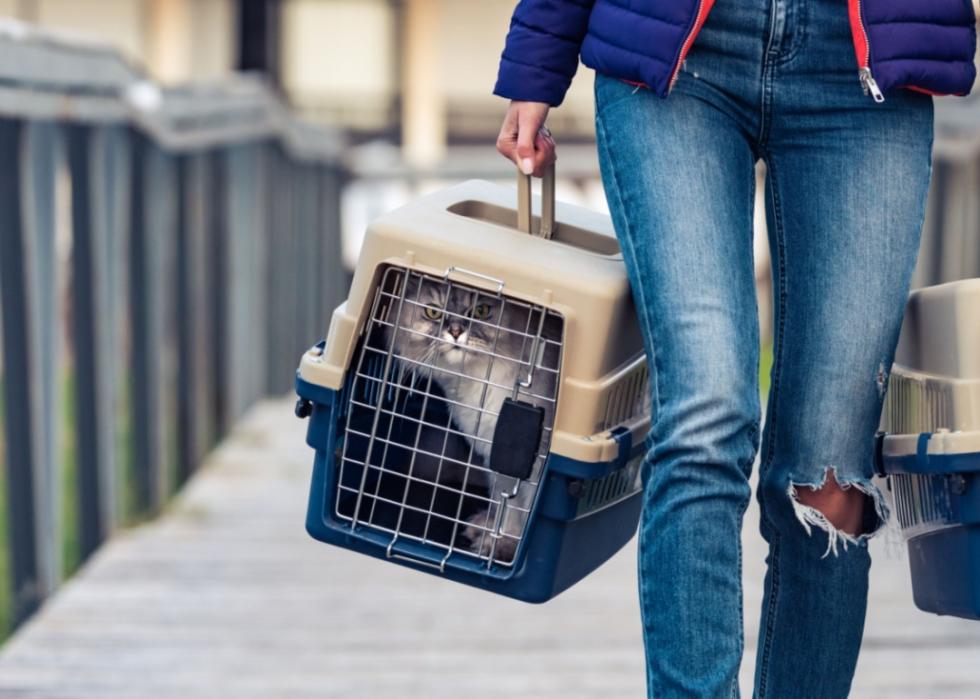
Depending on the airline, your pet may be allowed in the cabin, or you might have to check them as cargo; either way, they will be confined to a crate.
Crating during a flight can be traumatizing for an animal—if your pet is highly anxious, you may consider with your pet's veterinarian whether a tranquilizer would be appropriate to help keep the pet calm during the journey. However, before exploring that option, check whether the airline or company you're using allows pets under sedation, as many do not.
Calculating the ideal carrier dimensions based on your pet's height, width, and length is also essential. It's helpful to practice with crate time in the weeks before your departure. Always be sure your pet can stand, lie down, and turn around comfortably inside.
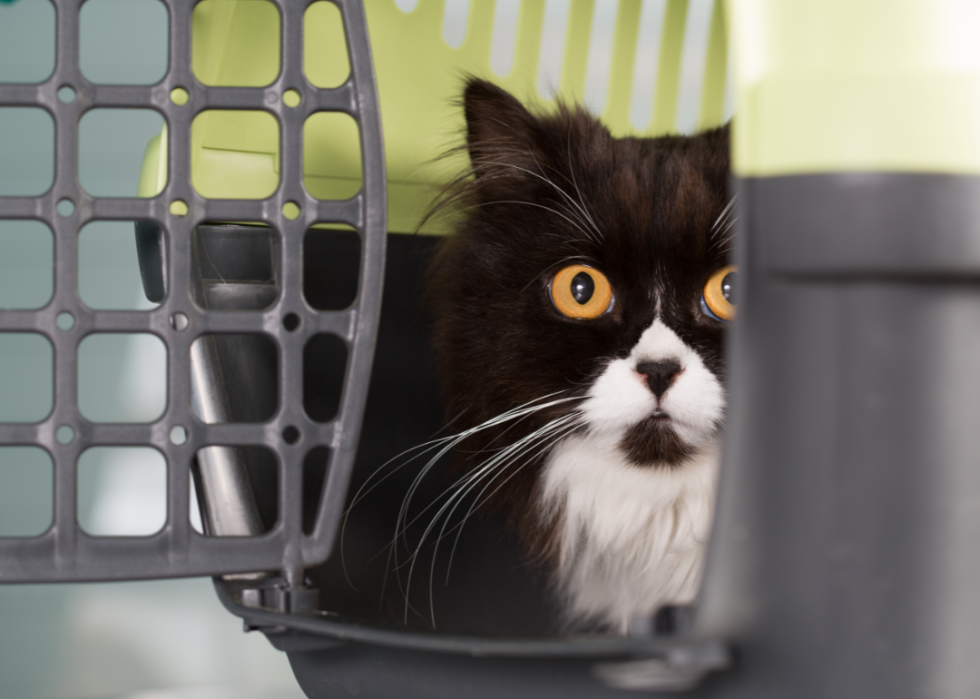
If you already have enough to handle on moving day, you can ship your pet separately through a third party.
The International Pet and Animal Transportation Administration provides a database that allows pet parents to search for a qualified shipper based on departure country or specific airport and destination. IPATA provides information on pet-shipping experts stationed at either location. The organization can still help if none are available by connecting you to a reputable and qualified shipping agent nearby.
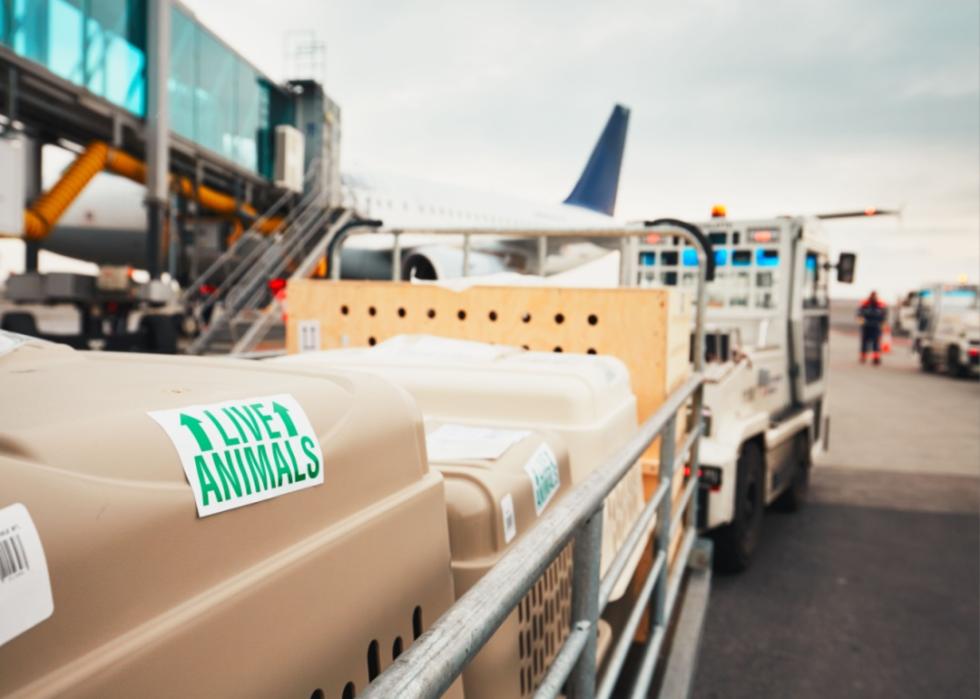
Pets necessitate additional layers of registration, security checks, and baggage preparation to a travel day; the typical rules of getting to an airport two hours before a domestic flight or three hours before an international flight don't necessarily apply.
Many flights accept animals on a quota basis, so be sure to call your airline at least 48 hours before setting out for the airport to make sure there is still space for your pet.
Your circumstances will dictate how early you should get to the airport and check-in. If you are checking your pet as cargo, for example, it's better to check in early so your pet can acclimate to being in the hold and get calm. If your pet is allowed in the cabin during travel, arrive as late as possible to minimize the stress and irritation your pet will bring on board.
Story editing by Nicole Caldwell. Copy editing by Kristen Wegrzyn. Photo selection by Lacy Kerrick.